AI Voice Models in 2026: ElevenLabs, Cartesia, and Beyond
A practical comparison of AI voice generation models for narration, voice cloning, multilingual content, and commercial production.
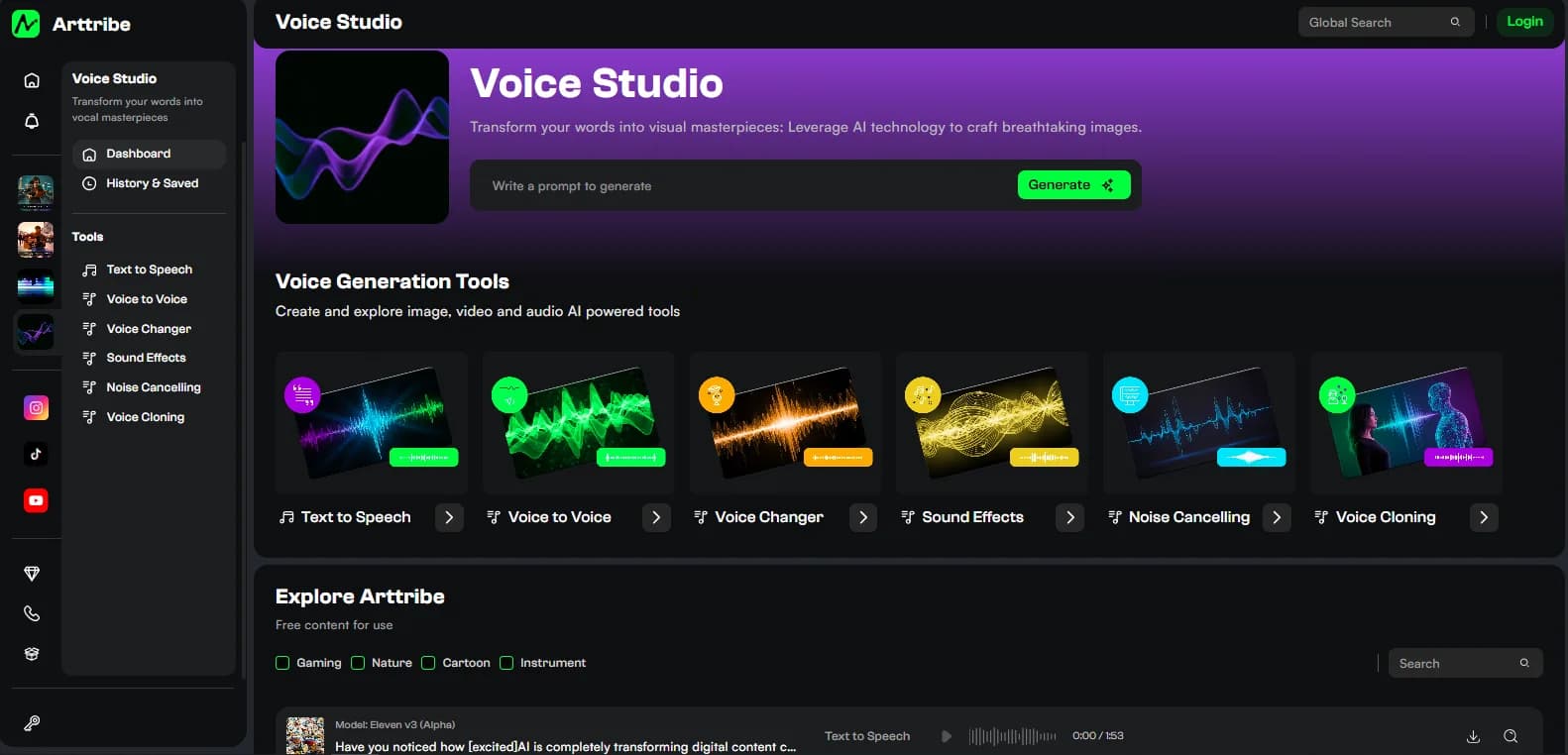
AI voice generation has moved beyond the robotic, monotone output of early text-to-speech systems. The current generation of models produces speech that is difficult to distinguish from human recording in many contexts. But the models differ significantly in naturalness, language support, voice cloning quality, controllability, and pricing.
The choice of voice model depends on what you are producing. Narration for a YouTube video has different requirements than character dialogue for an animation, brand voice consistency for a marketing campaign, or multilingual content for international audiences.
ElevenLabs: the quality benchmark#
ElevenLabs has established itself as the quality benchmark for AI voice generation. The output consistently sounds natural, with expressive intonation, natural pacing, and convincing emotional delivery. For English-language narration, ElevenLabs produces results that are genuinely difficult to distinguish from human recording.
ElevenLabs also offers strong voice cloning capabilities. The clone quality is high, with good preservation of vocal characteristics, pacing, and emotional nuance. For projects that require a specific authorized voice identity, ElevenLabs' cloning technology is among the most reliable available.
The trade-off is pricing. ElevenLabs is positioned as a premium service, and the per-character or per-minute costs reflect that positioning. For high-volume production, the cost can become significant. The free tier is limited enough for evaluation but not for regular use.
Cartesia: speed and multilingual strength#
Cartesia has differentiated itself through generation speed and multilingual capabilities. The model generates speech faster than most competitors, which matters for real-time applications, interactive content, and high-volume production workflows. The latency from text input to audio output is noticeably lower than many alternatives.
Cartesia also supports a wide range of languages with convincing results. For projects that need narration in multiple languages from the same voice identity, Cartesia's multilingual capabilities are a practical advantage. The quality across languages varies, but the range of supported languages is broader than many competitors.
The trade-off is that Cartesia's output, while good, may not match ElevenLabs' peak quality for English narration. The difference is subtle and may not matter for most use cases, but for projects where vocal quality is the primary differentiator, ElevenLabs may produce slightly more convincing results.
Other models to consider#
The AI voice landscape extends beyond the two most discussed providers:
- PlayHT: offers a range of voices with competitive pricing, useful for teams that need affordable voice generation at scale.
- Amazon Polly and Google Cloud TTS: cloud platform options that integrate well with existing AWS or Google Cloud infrastructure.
- OpenAI TTS: available through the OpenAI API, useful for teams already working within the OpenAI ecosystem.
- Coqui and open-source options: for teams that need local deployment, full control, or custom voice training.
Each of these options serves specific needs. The best choice depends on your technical requirements, existing infrastructure, and budget constraints.
What to compare#
When evaluating AI voice models, consider these factors beyond raw audio quality:
- Naturalness: does the output sound like a real person speaking naturally?
- Emotional range: can the model convey different moods and emotional states?
- Pacing and rhythm: does the speech flow naturally, or does it sound rushed or mechanical?
- Pronunciation accuracy: does the model handle names, technical terms, and unusual words correctly?
- Voice cloning quality: if cloning matters, how well does the model preserve vocal identity?
- Language support: does the model support the languages you need?
- Speed and latency: how quickly does the model generate audio?
- Pricing: what is the cost per character, per minute, or per word?
Cost per minute of usable audio#
AI voice pricing varies by provider and plan. Some charge per character, others per minute of generated audio, and some include voice generation in broader creative subscriptions. The real cost comparison should account for the number of generations needed to produce audio that meets your quality standards.
A model that costs more per minute but consistently produces clean, natural output may be cheaper overall than a less expensive model that requires multiple regeneration attempts. Track your success rate and calculate cost per approved minute of audio.
Voice cloning: practical considerations#
Voice cloning technology varies significantly between providers. Some offer high-fidelity cloning that preserves vocal nuance, while others produce clones that capture the general characteristics but lose some of the original's expressiveness.
For commercial voice cloning, verify that the provider's terms permit your intended use. Some providers require explicit consent documentation, others restrict commercial cloning to certain plan tiers, and some limit cloning to specific use cases. The technical capability to clone a voice does not automatically mean the platform permits every type of commercial use.
The practical recommendation#
For most production work, test two or three voice models with your specific content before committing. Generate the same script across different models and compare the output for naturalness, pacing, and overall quality. The best model is the one that produces the most convincing results for your specific language, content type, and quality requirements.
Consider maintaining access to one premium model for high-stakes projects and one more affordable model for routine production. This approach balances quality with cost efficiency across different project types.
Try this in Arttribe
Open the matching studio and run the workflow from this article.
Compare Voice Models