Best AI Music Models in 2026: Songs, Beds and Production Fit
Compare AI music generation in 2026 by use case: instrumental beds, full songs, video timing, vocals, iteration cost, and how to choose inside Music Studio.

There is no single best AI music model in 2026. Beds, songs, and timed soundtracks fail in different ways. A track that sounds finished as a song can wreck a voiceover. A loop that sits perfectly under an ad can feel empty as a release. Rank music models and tools by the asset, then by how many takes you need to approve it.
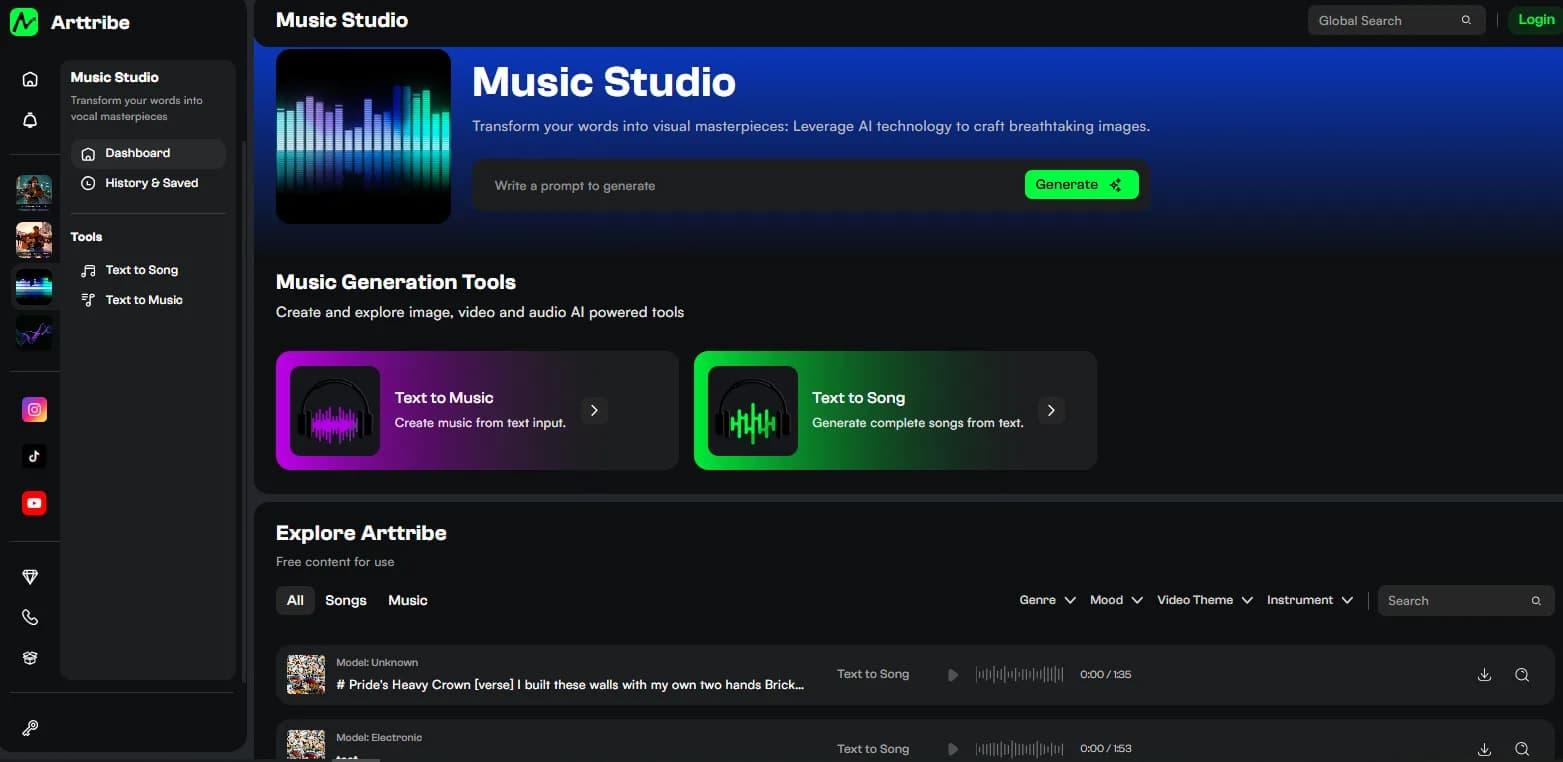
Arttribe Music Studio splits that work into text to music for instrumentals and text to song when vocals and song structure matter. The studio identity is that split, plus the fact that the track can sit next to video and voice without a file bounce through three apps.
What to compare besides “it sounds good”#
Listen in the edit, not only on the generation page.
- Fit to picture: intro length, downbeats, and ending.
- Fit to speech: space in the midrange for text to speech.
- Structure: bed vs verse/chorus.
- Vocals: present, absent, or in the way.
- Length: can you hit 15s, 30s, 60s without a clumsy fade.
- Iteration: how often a prompt produces a usable take.
- Rights: commercial use on the plan you actually have.
This is the same “cost per approved asset” idea as how to compare AI models.
Instrumental models and beds#
For YouTube, ads, and social, the usual winner is an instrumental bed. Text to music is the Music Studio tool for that job. You want mood, tempo, and a clean ending, not a singer competing with the product name.
Prompt like a brief: genre, energy, instruments, duration, and where it sits in the video. AI music generation in 2026 has the brief template. AI music for video and social covers testing against the cut.
Song models and vocal tracks#
Text to song is for hooks, full songs, and content where lyrics are the point: music channels, branded anthems, lyric-led Shorts. Vocals change the mix rules. You either feature them or you picked the wrong tool.
If you need lyrics in a specific language or a tight hook for a 20-second clip, generate a song, then cut. Do not force a bed generator to invent a chorus.
The full decision is in text to music vs text to song.
Iteration cost beats demo quality#
Music generation is cheap per take and expensive per wasted hour. A model that misses structure five times is slower than a slightly less flashy model that hits a usable bed twice.
Work in batches. Keep the prompt stable. Change one of: tempo, density, or vocal presence. Save the prompt when a track locks to picture. That library is how Music Studio becomes a brand system instead of a slot machine.
Pairing music with voice and picture#
Generate music after you know whether speech exists. If Voice Studio will carry the message, ask for restrained percussion and fewer competing melodies. If the video is visual-only, a denser text to song hook can lead.
A practical Arttribe path: still in Image Studio, motion in Video Studio, bed in Music Studio, read in Voice Studio. How to build an AI creative workflow is that sequence in full.
Rights and records#
Keep provider, date, and intended use for commercial tracks. Platform terms differ. Generating a song does not automatically clear every ad network or client contract. Check current Music Studio and plan terms before a paid campaign.
Practical recommendation#
Pick the tool by output type, then test two or three takes against the real cut. Use text to music for beds. Use text to song for songs. Keep both inside Music Studio so the brand of the workspace stays obvious: music for production, not music as a detached toy.
Try this in Arttribe
Open the matching studio and run the workflow from this article.
Explore Music Studio